Tuesday, 17 December 2019

Aaron Swartz On Fun As A Means Of Motivation


Labels: , ,

Wednesday, 12 June 2019

The Tyranny of Digital Metrics


Labels: , , ,

Wednesday, 11 July 2018

On Joy

joy in the morning
A person with joy on his or her face early in the morning is a person looking forward to something. It doesn't matter whether that thing is out there somewhere or within.

Labels: , ,

Tuesday, 10 July 2018

Why Fiction Is A Superior Art Form To Non-Fiction

why fiction is a superior art form to non-fiction
When it comes to reading, I have found non-fiction is a lazier form of absorbing wisdom. Whether you are reading essays or self-help books, everything you need to learn is spelt out for you.

Fiction is a bit more sophisticated in that, like a mole in a hole, you have to dig out what you need. Aside from kindergarten stories, no fiction will leave precious gems on the surface for you to pick up. Also, some tales have no to wisdom to impart, no point to make. Hence, reading fiction is a more complex exercise than reading non-fiction.

As societies around the world modernise, leadership seem to have less use for riddles, fables, or stories. It is rare to see one of our so-called "thought leaders" advocating a work of fiction. Most books in our recommended lists are limited to a few genres in the non-fiction section.

This stagnation of the mind is one of the things I have noticed since I started reading fiction again in the past months. It was challenging at first. I felt a bit stupid. I also felt as if I was wasting my time. But I have stuck with it and the rewards have been better than expected. There is an opening of the mind that is difficult to explain. You are required to look deeper and use your imagination much more. Also, I found there to be more excitement and joy on the pages. This is a path I would recommend to fellow adults to try if they aren't on it yet. It is worth it.

Labels: , ,

Monday, 19 February 2018

Review: Feel Free - Essays by Zadie Smith


Feel Free is a collection of essays (some old, some new) by the English writer, Zadie Smith.

WHO WOULD ENJOY READING IT?
People who love reading heavy, analytical essays. Those with a liking for free-flowing, simple prose should stay clear.

WHAT I LOVE MOST ABOUT "FEEL FREE"
The author's insights are unique and interesting enough to make me want to read more. One of the essays, titled “Generation Why”, is particularly insightful.

Generation Why discusses the link between the quirks of the founders of social media - Facebook in particular - and the effects on its users.

For example, did you know that Mark Zuckerberg, founder of Facebook, is red-green colourblind? This means blue is the colour he can see the most and the best. This is why Facebook is mostly blue.

Going beyond colour schemes, the author further argues few points that show how Zuckerberg's deep-set ideas are woven into Facebook and how those philosophies are changing the way Facebook users think and relate to one another.

WHAT I DO NOT LIKE
Few of the essays seem inaccessible. There are some ramblings and lack of coherent train of thought on the pages make some paragraphs difficult to enjoy.

MEMORABLE PASSAGE
"It feels important to remind ourselves, at this point, that Facebook, our new beloved interface with reality, was designed by a Harvard sophomore with a Harvard sophomore’s preoccupations. What is your relationship status? (Choose one. There can be only one answer. People need to know.) Do you have a ‘life’? (Prove it. Post pictures.) Do you like the right sort of things? (Make a list. Things to like will include: films, music, books and television, but not architecture, ideas or plants).
“But here I fear I am becoming nostalgic. I am dreaming of a Web that caters to a kind of person who no longer exists. A private person. A person who is a mystery, to the world and - which is more important - to herself."
.......
Feel Free: Essays by Zadie Smith hits stores in February 2018. Available in all major online bookstores.
Many thanks to Penguin Press for review copy.

Labels: , ,

Friday, 1 December 2017

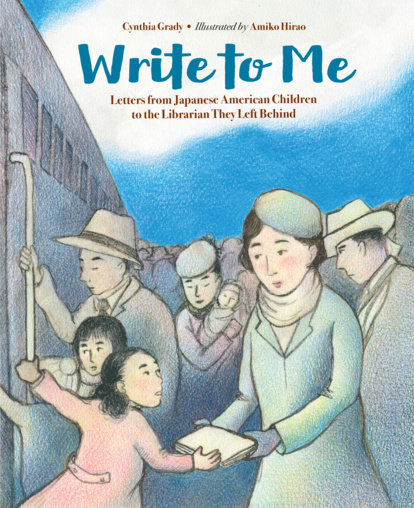
The Trials Of Japanese-American Children During World-War 2


"... explores the love of reading and the life of the librarian who cared enough to keep looking out for children who shared her love of books and have been unjustly segregated."

WORLD WAR 2
World War 2 is a popular subject in books, games, and movies. A large proportion of its aspects have been examined and explored - the effects of food, propaganda, weather, weapons, etc have been scrutinised and theorised. Even the exploits and vices of countries involved have been looked at and dissected over and over. However, there still remains few details of that war, especially the consequences, that is not well-known and popular for various reasons.

ABOUT THE BOOK
In any case, Write To Me by Cynthia Grady and Amiko Hirao is a book (albeit for 4 to 8 year olds) that looks at the treatment of Japanese-Americans at the hands of Franklin Roosevelt-led American government during World War 2.

The bombing of Pearl harbour prompted the American government into sending all Japanese-Aameircanfamilies into prison camps for the duration of the war. The rationale was the fear that the Japanese-American communities might have spies reporting to the Japanese government. As a result of this thinking, Japanese-American properties were seized and everyone, including children, where sent to prison camps to live with minimum food and comfort.

Write To Me by Cynthia Grady and Amiko Hirao is a story told from the perspective of children writing to their librarian, telling her of daily inconveniences and thanking her for the books she keeps sending to them.

Write To Me is based on real life and the story of Clara Breed, a librarian in San Diego who advocated for Japanese-American children during the war and kept exchanging visits and letters with them, including sending them books.

CONCLUSION
The book explores the love of reading and the life of the librarian who cared enough to keep looking out for children who shared her love of books and have been unjustly segregated.

Write To Me by Cynthia Grady and Amiko Hirao is an insightful book, exploring a marginalised aspect of history. It is an eye-opener for children and adults and shows how the love of literature transcends races and backgrounds.

Write To Me is published by Charlesbridge Publishing. Many thanks to them for the review copy.

Labels: , , ,

Thursday, 26 October 2017

Zerocalcare On Life, Politics, And Misconceptions About The Syrian War


UNCOMFORTABLE READING
Kobane Calling is a kind of book I wish most people would read, especially those interested in international affairs. However, it is that kind of book that a lot of people won't read; firstly because it is a graphic novel addressing a matter of importance - war. The cartoon medium is still grappling with general acceptance, especially with regards to heavy topics. Also, Kobane Calling reads in a way that confronts our perceptions about Muslims, the Middle East, Syrian war and the western countries role in it. These combinations make it an uncomfortable reading at times, but this is what makes the book potent.

ABOUT THE BOOK
Almost everyone with an interest in politics in today's world knows what is going on in Syria. Kobane Calling us a graphic novel exploring the experiences of an Italian cartoonist, Zerocalcare, (real name Michele Rech) who went into the region to experience first-hand what is going on there. Think of this as a journaling of some sort about people, events, and personal perspectives about what in Syria. The book covers many issues on the the region -women soldiers, unknown techniques Isis uses to gain upper hand, the calibre of people they recruit, the role of religion in the war, and the deliberate misconceptions manufactured in Europe and United States which has nothing to do with what is happening in the region.

CONCLUSION
Kobane Calling is witty and enjoyable read. Though few of the characters in the book had their identity changed for security reasons, their determination and essence still shine through. Kobane Calling shows how much in the thrall of modern news media we are and how deep we soak narratives that are presented to us without alternatives stories to counter it. Most importantly, Kobane Calling is a book without cheap and easy answers. It does not even attempt to set off in search of one. This is one of the best books I've read this year. Warmly recommended.

Kobane Calling is published by Lion Forge. Many thanks to them for the review copy.

Labels: , , , , ,

Thursday, 19 October 2017

The Importance Of Micro-Decisions

I have neither created 
nor loved for some time, I swat 
at a fly and miss, I am an 
old grey dog growing toothless. 

I have a typewriter and now 
my typewriter no longer has
anything to say. 

I will drink until morning 
finds me in bed with the 
biggest whore of them all: 
myself.
- Charles Bukowski

Time, as a concept, is unbiased. You could give two or more people the same period of time to do an activity and you would get different outcomes. Also, two people with the same lifespan and similar life opportunities would often have different tales woven around them at the end of their lives. It seems time, as important as it is, is not as vital as the actions performed within its framework.

In this era, we always seem not to have enough time to do all that we want. There is a common feeling that always accompanies the use of time - guilt. The guilt comes from the feeling that we have not used our time wisely enough. For example, there is the feeling of regret at not having made the most of one's talents. A man may sacrifice his talents for the well-being of his family or blame the circumstances of his birth environment for his inability to follow his path, but it won't alleviate the soreness of his loss when he finds himself, at long last, alone as his life limps towards its final destination.

We might even employ talents and do what we can with it, however even this doesn't dispel the question - did I do the utmost with what I have? Did I make most of the opportunities that came my way?

The fear of expiring, in relation to your work, is one of the themes explored by Charles Bukowski in one of his previously unpublished poems, I Think of Hemingway. The poem is part of a collection of similar previous unpublished works titled Storm for the Living and the Dead: Uncollected and Unpublished Poems, now published by HarperCollins. In a classic Bukowski style, a lot of the poems in this collections are gritty and observational. If you are looking for flowery language with answers to life's problems, then this collection is not for you.

In the poem, I Think of Hemingway, Bukowski observes the feelings that follow the inability to work on what you enjoy, due to old age or other circumstances. He writes about the feeling of shame and helplessness that follows in its wake.

By all accounts, the dread of not doing enough, not fulfilling your potential, the terror of old age, is something that happens to most. However, there are no easy answers. Each of us must decide how to deal with this on a day to day basis. We must make decisions as to what jobs we take up, the nature of invitations we turn down, what kind of town we want to live in, and what manner of activities we fill our spare time with. In short, we all must make choices we can live with (or die with) as the clock counts down to our earthly departure.

Many thanks to HarperCollins for review copy.

Labels: , , , , ,

Thursday, 12 October 2017

Review: #6 The Change - Noriko's Story


NARRATION/VOICE
The style of narration in Noriko's Story isn't for everyone. Some prefer a book's narrator to keep his or her thoughts directed within the page. However, the narrator in Noriko's Story seems to reach outside of it to speak to the reader, telling us what to feel and what it is feeling. This is intriguing but risky.

ABOUT THE STORY
Noriko's Story is about... well, Noriko. The story setting is that of a dystopian Tokyo where a rogue AI, unsuitably called HA/HA, has taken over the city and running it as humanely as a psychotic AI can.

The spine of the story features Torino's quest to find her parents who had been missing since the beginning of HA/HA's coup. Through her eyes, we explore the harsh ways in which HA/HA manages Tokyo and the lives of the people living under its rule. Apart from HA/HA's efforts to capture humans who are outside of its rule (Toriko included), the book also shows us some of the feats of the rebels trying to survive and fight back. Surprisingly, there is also a sprinkle of disgruntled robots not happy with the HA/HA's style of ruling who are also rebelling the only way they know how. .

CONCLUSION
Noriko's Story is a blend of sci-fi and fantasy. There is also a bit of fighting, killing and such. The narrator's voice takes some time getting used to, but it is not boring by any means. For me as a reader, this book serves more as a starter rather than the main meal. Noriko's Story does more to set me up for what is to come rather than making a big deal of what is happening. A fairly interesting book.

Noriko's Story is published by Solaris. Many thanks to them for the review copy.


Labels: , ,

Thursday, 5 October 2017

Rising Above Epilepsy and Its Psychological Claws


When it comes to illnesses, especially those that feed on emotional reactions to external stimuli, it is wise to not assume too much but listen to its sufferers and do what you can to empathise - even when you do not understand half of what is being said. This is because, unless you have come under the hand of the illness itself or you are close to someone who has, you may never truly understand what its sufferers go through. The graphic novel, Mis(h)adra, shines a clearer light on this for me, as I realise the emotional and psychological toll epilepsy takes in its sufferers. 

Mis(h)adra is a fictional account (loosely based on the author's own life) of an epileptic patient called Isaac. The book chronicles how neighbourhood noises, insensitive comments, and Isaac's own negative thoughts, contributes to a debilitating anxiety that gives the illness more power to manifest itself. The book also shares how easy it sometimes can be for people suffering from epilepsy to develop an addiction for the medicine they are taking and from there take an overdose. Most importantly, Mis(h)adra reveals what it sometimes takes for epilepsy sufferers to rise above the illness. The book shows that reaching out, taking one day at a time, not giving up is key to managing it.

For those who know little or nothing about epilepsy but want to have a basic understanding from the perspective of a patient, Mis(h)adra is a wonderful educational tool. Also, those with the illness can read and take encouragement from Isaac's story, using it as an emotional and psychological boost towards managing the illness.

Lest I forget,  the art style in Mis(h)dra is unique. Its use of colour to heighten emotional effects works well. The whole reading experience stayed with me for days. Mis(h)dra is a book worth reading.

Mis(h)dra is published by Gallery 13. Many thanks to them for the review copy.


Labels: , , , , ,

Thursday, 28 September 2017

Review - Quackery: A Brief History Of The Worst Ways To Cure Everything

No one is safe from the clutches of experts. From financial matters to medical concerns, we must listen to people with high-sounding degrees who know more than we do. Even modern rulers with huge political power have to sometimes put their lives and careers in the hands of people who profess to have specialised knowledge in a particular area of life. Yet we sometimes forget that experts are people trying to figure out life as well as complicated details of their craft. No one knows all they need to know about their area of specialism. This includes the so-called experts.

Quackery is a record of dangerous medical concoctions that were once proclaimed and, in some cases, certified as medicine that would cure common ailments.
For example, the authors state that arsenic compounds were once used as legitimate medicine for syphilis. It was also used extensively in beauty products. Though arsenic did its job (when used in small doses), it was dropped in the 1990s when it was discovered that its toxicity helps cancer thrive within the body.

Also, did you know that surgical removal of ovaries was used to treat hysteria in the nineteenth century? Apparently, a "prominent gynaecologist, Isaac Baker Brown decided that anything that nourishes or gratified a woman's sexual appetite was bad, bad, bad. He recommended and perform clitoris removals and even chopped out his sister's ovaries."

Quackery is a book for medical history lovers as well as for those with a liking for learning odd facts.
The authors did a good job and put in lots of effort to make it funny. The book also contains historical images and is definitely not for the squeamish.

Many thanks to Workman Publishing Company for review copy.

Check out my webcomics on Tapas & LINE Webtoons.

Labels: , , , ,

Thursday, 17 August 2017

Stream Of Consciousness As A Path To Consistency In Writing


As a person who uses their imagination to create stories with words and pictures, I rely on my mind a lot. However, after many years of experience, I also know that this important tool of mine can also be a major hindrance in getting work done.

The mind, though useful, sometimes seems to have plans on its own. It chatters and wanders and gives you 500 reasons why you should be somewhere else rather than where you are at the moment. During times when life troubles are getting the best of you - your child is ill or the weather is making you uncomfortable, or you are in pain - this is one of the time when the mind completely ceases to be a helpful tool. Unfortunately, this phenomenon gets in the way of consistency. I have come to realise that, to become a skilled writer and illustrator, the mind is one of the frontiers I have to tame.

I believe this is why the stream of consciousness technique works for creatives. Stream of consciousness (or freewriting) is a technique where, as a writer, you write whatever comes to mind without filtering it through your thoughts or inner monologue. This kind of writing tends to be disjointed and nonsensical on paper, however, it helps in temporarily tuning-off the talkative part of the mind so that words can be written freely.

There are benefits to this practice, Albert F. DeSilver, writer of the book, Writing As A Path To Awakening, testifies in his work. He writes:
"I have noticed that the more I practice truly letting go and getting out of my own way, the more raw, honest, insightful, and revealing my writing becomes. Our minds are so quick to judge and condemn, to interfere and sabotage, that much of the time we don't even know it's happening."

Writing As A Path To Awakening contains many similar insights and techniques in approaching writing. The book shows that writing can be used to explore our consciousness in a way that makes us understand ourselves much more, making us more happier and at peace.

Writing As A Path To Awakening is published by Sounds True Publishing. Many thanks to them for the review copy.

Labels: , , , , ,

Friday, 17 February 2017

William Combs On The Spirtual Downside Of Being Good


How do people who perceive themselves to be religious or spiritual decide who is more worthy? We sometimes use spiritual exercises, religious posts, knowledge, or deeds to navigate this slippery terrain. Some criteria are better than others, but William Comb, says in his book, Who Told You That You Were Naked?, that using good deeds as to judge a person's righteousness is dangerous. The danger lies in the false sense of security we generate when we assume we behave better than other people. More dangerous is the complete oversight of the human nature that this attitude generates.

According to William Combs,
“By reducing sin to a mere list of offences, we can convince oursevlves that we are becoming better persons because we are commiting fewer “sins” than we once did. This attitude shifts our focus away from the devastating consequences of sin—the inner conviction we do not measure up.”

The implication of this attitude is that a Christian who sees himsel or herself in the light of how “good” he or she is has no spiritual leverage against non-Christians who feels the same. William Combs expands on this point:
“The Christian Gospel has little relevance in our society because the vast majority do not see themselves as 'sinners'. As long as sin is viewed as a list of misdeeds, and repentance as the need to confess and feel remorse for those sins, many will reply that they, and most folks they know, are 'good people'. They simply do not see any need for salvation. If we don’t wrestle with the full ramifications of sin, then we diminish our perception of salvation as well. We may believe all we inherited from Adam was the ability to choose between good and evil and that God’s redemption in Jesus Christ paid the penalty for our bad choices. If such were the case, it would be like a judge who chooses to improve the way people drive by paying for speeding and parking tickets. But more is required: in order to modify a person’s driving habits or overall lifestyle, it is necessary to reform behaviour.”

William Combs then uses this opportunity to focus on the solution to the problem of sin by using Paul the Apostle's struggles. He writes:
“Why is the body of sin brought to nothing? Because through faith, our old self—our spirit dwelling within our physical body—has been crucified with Christ. Sin cannot control a deceased person. In Romans chapter 7, Paul struggled mightily to overcome sin dwelling in his members—but could not. Those very actions indicate he was focusing on sin in his members—meaning he was alive to sin, not dead to sin as Romans 6:11 indicates. As long as he, or we, wrestle with the sinful habits we no longer wish to perform, our adversary will win because we are conforming to a way of life sin can control. To sin means we should not attempt in any way to resist sin any more than we would if we were lying (dead) in a pine box.”

This issue also brings to light the aim of Christianity - is it to modify our behaviours and make us morally good? Or is there a much deeper meaning to look at. Such and similar questions are what Who Told You That You Were Naked? dealt with in his book.

Many thanks to Carpenter's Son Publishing for review copy.

Labels: , , ,

Thursday, 9 February 2017

Becky Eldredge On Imagination As A Tool Of Prayer

As we go about our busy lives in a technology-driven world, we must craft our inner life in a way that makes it easy to communicate with God where and when we want.
Imagination As A Tool Of Prayer

Prayers (in a Pentecostal Christian context) has been more of an external performance in recent times. A performance suited to the well-spoken and to those with tastes for the dramatic. There is little time left for silence or prayerful contemplation in our religious gatherings (except for preaching time). The say-what-you-can-in-the-most-evocative-words-you-can-muster exercise is not suitable for all, neither does it benefit all.

This is why I am a bit partial to what is called Ignatian Contemplation - a practice that involves the use of imagination to pray and connect to God. Needless to say, Ignatius of Loyola, one of the founders of the Jesuits order, first advocated this practice as a way to keep God actively present in his mind and heart in order to make good decisions in his life among other things.

Busy Lives and Restless Souls is a book that focuses on the practices of the Jesuits. The book explains that the core of Ignatian spirituality is the idea that "...the interior life must be adapted to fit the circumstances of the exterior life." This means as we go about our busy lives in a technology-driven world, we must craft our inner life in a way that makes it easy to communicate with God where and when we want. The ease at which we can do this is one of Ignatian practices' strong points.

Becky Eldredge, the author of Busy Lives and Restless Souls explains how to practice one of the key pillars of Ignatian Spirituality, which is the Ignatian Contemplation. She writes down the steps in a simple way. It goes like this:

How to Pray Using Ignatian Contemplation
...
Select a Scripture.
Pick a passage from one of the four Gospels: Matthew, Mark, Luke, or John.

Read.
Read the passage several times slowly so that you almost know the story well enough to share it with another person.

Imagine the scene.
Close your eyes and imagine the scene. F or instance, if you are praying with the scene of Jesus’ birth in the manger, imagine what this scene looks like. Who is in the scene? What are they doing? Where are they located? What do you notice about the environment? What do you smell? What do you hear? Let the Holy Spirit guide this unfolding event in y our mind.

Put yourself in the scene.
As the scene begins to take shape, put yourself in it. Notice where you end up. Again, with Jesus’ birth in the manger, notice: Am I standing by Mary or Joseph? Am I peering into the manger to sneak a peek at baby Jesus? A I off at a distance as an observer? Am I standing by the animals?

Notice what happens.
Let the story unfold in your mind. Stay with the Scripture story in prayer.

Respond and rest.
Share with God what you noticed and experienced. Then rest in God and let God speak to you.

Reflect.
Reflect on what you experienced during this prayer. What did you learn about Jesus? A bout God? A bout another character in the story? About yourself?
Busy Lives and Restless Souls is a book that teaches the benefits of Ignatian Spirituality as well as gives practical examples about how to put it to use whether your are a priest or stay-at-home Mom. I recommend it.

Many thanks to Loyola Press for review copy. You can purchase a copy of the book at Amazon and other major online bookstores.

Read more »

Labels: , ,