Saturday, 28 July 2018

Trying To Do What's Right Versus What's Easy


I like The Strange Case of Dr Jekyll and Mr Hyde by Robert Louis Stevenson. It is a book that deals with a long-term problem faced by every human. It starts from when we master walking to when we are no longer able to do so.

The struggle with human nature is a daily occurrence. Striving to rise above our selfish impulses or sacrifice temporary desires to help another is part of life demands. Every human wants to be the hero of his own story. But there is also a side of humans that want to hurt others, self-sabotage, do away with obstacles no matter what it takes... all in the bid to get what we want.

This constant fight is at the root of existence and one of the subjects of Tara Gilboy's new book, Unwritten.

In Unwritten, we see fairytale characters escape from an unfinished manuscript written by a writer named Gertrude Winters. Ms Winters' characters are on the run from a villain that seeks to capture and draw them back into the story. But the escapees are determined to live their lives outside of what has been written about them.

For example, one of the escapees, Gracie, who is a villain in the manuscript, has behaved otherwise since living outside of the story. As the power of the story pulls her to behave in an obnoxious way, she fights against her scripted self to do what she thinks is best for herself and her family. All through the book, we witness Gracie torn between who she is supposed to be and who she desires to be.

Unwritten by Sarah Gilboy reveals the difficulties of trying to do what is right versus what is easy. It also shows that internal struggles, though personal, needn't be borne alone.

Many thanks to Jolly Fish Press for review copy.

Labels: , , ,

Tuesday, 24 July 2018

The Limitations Of Enforced Habits

There is an allure about a person who undergoes rigorous discipline to achieve something most people consider "great". Stories of people almost working themselves to death to achieve abundant riches are always inspiring to many.

Today, going through hardship to master a skill is one way to garner respect - it doesn't even matter whether you enjoy the practice or not. For many, toil and pain matter more than the love of the process. Hardship, it seems, have some kind of value in itself.

Those who enjoy their work process are sometimes viewed as freaks, unserious people with no appreciation for the value of hard work. We see such as missing something essential. We believe they will never succeed at anything in the long term because they haven't paid the "price" or suffered enough

However, when it comes down to it, I have found that a person of discipline mostly defers to a person motivated by love. Those who love their own existence and enjoy what they do daily have an assurance about them that is irresistible. They might not be covered with gold and pearls, but they naturally attract admiration and envy of most.

More importantly, when it comes to it, enforced discipline always fail its adherents. Enforced habits rarely reach the place that matters - the heart. When huge life tests come, characteristics we've taken upon ourselves that aren't part of our natural flow falls away. It does not matter the reasons we acquired them, how much price we pay... they rarely help in overcoming great challenges.

This theme is played out in Julie Kagawa's Shadow of the Fox about Yumeko, a kitsune (half-human and half-fox) who is on the run with an important scroll she is entrusted to deliver to another temple. Yumeko strikes up a friendship with Tatsumi, an assassin who is also after the scroll. Together they travel across feudal Japan, fighting demons, witches and bandits. 

Tatsumi the assassin and the wielder of a demon-possessed sword is enthralled by Yumeko who seems to be more in tune with her feelings. Tatsumi is surprised that a carefree Yumeko seems to get results though she acts based on instincts. Though she seems to lack the necessary skill to survive tough fights, Yumeko always comes out alive with acts of ingenuity. With time Tatsumi begins to respects his companion's determination and capability.

Together the two unlikely companions rely on each other as Tatsumi begins to throw off the shackles of enforced discipline and inhumane treatments he's endured to embrace his own nature, despite the danger he faces from the demon in his sword and his clan.

Labels: , , ,

Friday, 20 July 2018

A Little Piece Of Her Examines The Evils Of Female Genital Mutilation

Zidrou and Raphaël Beuchot

A Little Piece Of Her tries to educate on the evils of female genital mutilation using a story of a Chinese man and a Congolese woman trying to make their relationship work. Apart from the awkwardness of interracial relations in Congo, the book also takes a cursory look at politics and the way expatriate investors view and interact with their local employees and vice versa.

A Little Piece Of Her is an ode to the courage of countless people swimming against the tide of exploitation, racial discrimination, and sexism. It also shows how insidious the practice of female genital mutilation is and the outdated thinking behind it. It reveals the progress being made and highlights ways to help combat it.

A Little Piece Of Her is an educational comic that hid its message in a solid story setting. The art is okay but the dialogue is one of the best things about it. This is a book with a powerful message and a solution.

Many thanks to Europe Comics for review copy.

Labels: ,

Monday, 16 July 2018

The Fear Of Growing Old

Most of us worry about getting old. Yet this anxiety is more acute when we hit our middle-age.

Old-age worries often come unbidden. Seeing our bodies unable to shrug off pain like it used to bring dark thoughts that zero in on our mortality. Despite what we see on our screens, death is a human reality. There is no drug or cream against growing old. 

Hank and Molly
The relationship between the fears of old age and the actions it fosters is at the root of Upgrade Soul, a graphic novel by Ezra Claytan Daniels. In the book, we see how Hank and Molly pledge their wealth to an experimental experiment that reverses ageing. The consequence of this action and the ethical question it raises are what the book tries to grapple with.

Upgrade Soul does not bother moralising about the right and wrong of scientific ethics. What it does best is reveal the depth of fear humans have about their legacy in the face of death. It also shows that mentally putting yourself in other people's shoes do not always translate into empathy. Lastly, it lays bare the influence of love and trust over many other powerful emotions.

Many thanks to Lion Forge for review copy.

Labels: , , , ,

Thursday, 12 July 2018

How To Become Immune To Propaganda


Reader Come Home by Maryanne Wolf focuses on the relationship between reading and technology. It reveals how much the recent changes in technology have impacted the way we read and comprehend words.

Skimming is a much more common form of reading today. The sheer speed of modern life has taken away the enjoyment that comes from reading in between the lines, discerning complex plot lines, and picking up clues left by authors.

Deep reading, a kind of reading that goes beyond entertainment - the kind that empowers people is receding. This loss is making readers more open to sensationalism, deception and manipulation. And this has affected the way authors write as well. Since most people now want to get to the point quicker, writers are writing in small chunks. Longer works with complicated sentences go unread in libraries and online.

Disturbingly, Maryanne Wolf encapsulated the process of reading degradation into three steps:
“First, we simplify. Second, we process the information as rapidly as possible; more precisely, we read more in briefer bursts. Third, we triage. We stealthily begin the insidious trade-off between our need to know with our need to save and gain time. Sometimes we outsource our intelligence to the information outlets that offer the fastest, simplest, most digestible distillations of information we no longer want to think about ourselves.”
To pull ourselves out of this habit, Maryanne Wolf believes we need patience and the practice of rereading. Rereading a book forces the brain to slow down in most situations. It makes us match our reading pace to the pace of the writer since we are no longer reading to absorb information but to understand. Also, when a reader reads a book for the second or third time after many months or years, he or she is no longer the same person. As a result of this change, the reader brings in more understanding, reflectiveness, and patience to his or her task.

Reader Come Home: The Reading Brain in a Digital World by Maryanne Wolf is published by Harper.

Many thanks to Harper for review copy.

Labels: , , ,

Wednesday, 11 July 2018

On Joy

joy in the morning
A person with joy on his or her face early in the morning is a person looking forward to something. It doesn't matter whether that thing is out there somewhere or within.

Labels: , ,

Tuesday, 10 July 2018

Why Fiction Is A Superior Art Form To Non-Fiction

why fiction is a superior art form to non-fiction
When it comes to reading, I have found non-fiction is a lazier form of absorbing wisdom. Whether you are reading essays or self-help books, everything you need to learn is spelt out for you.

Fiction is a bit more sophisticated in that, like a mole in a hole, you have to dig out what you need. Aside from kindergarten stories, no fiction will leave precious gems on the surface for you to pick up. Also, some tales have no to wisdom to impart, no point to make. Hence, reading fiction is a more complex exercise than reading non-fiction.

As societies around the world modernise, leadership seem to have less use for riddles, fables, or stories. It is rare to see one of our so-called "thought leaders" advocating a work of fiction. Most books in our recommended lists are limited to a few genres in the non-fiction section.

This stagnation of the mind is one of the things I have noticed since I started reading fiction again in the past months. It was challenging at first. I felt a bit stupid. I also felt as if I was wasting my time. But I have stuck with it and the rewards have been better than expected. There is an opening of the mind that is difficult to explain. You are required to look deeper and use your imagination much more. Also, I found there to be more excitement and joy on the pages. This is a path I would recommend to fellow adults to try if they aren't on it yet. It is worth it.

Labels: , ,

Monday, 9 July 2018

Power And Betrayal in Tyler Ellis' Chimera: The Righteous And The Lost

chimera tyler ellis
When the acolytes of a god approach a band of thieves to secure an artefact, the signs of a potential apocalypse starts showing itself. Aside from the thieves being betrayed from within, there is a small matter of a company of a dragon and an assassin who are also after the artefact. Adding to that is the presence of a mysterious being who can read minds, thus manipulating anyone that comes in contact with it. All these pointing to the beginning of absolute chaos.


Chimera: The Righteous and the Lost is full of strange characters with hidden motives. Aside from the themes of power and betrayal, there is a constant undertone of religion and its influence in this book, but it is not deep enough to warrant philosophical thought. The art of Chimera pleasant to the eyes. The dialogue is smooth and believable. Also, the plot is well-weaved and the ending kept me gasping for more.

Many thanks to Comicker Press for review copy.

Labels: ,

Tuesday, 3 July 2018

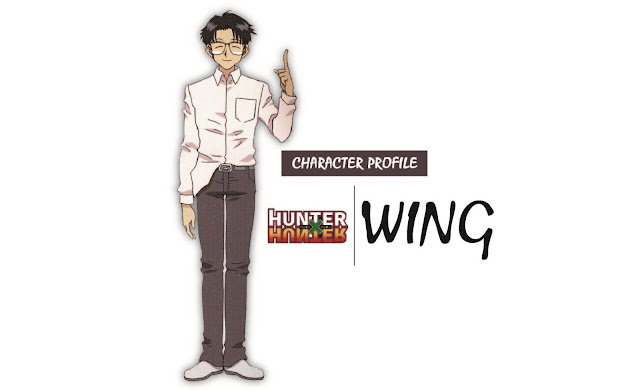
Hunter x Hunter's Wing: A Profile Of An Ideal Educator


PERSONALITY
Wing is a fictional character in oshihiro Togashi's manga - Hunter x Hunter. He is a young man with an unusual combination of casual, shabby appearance and a forgetful trait who is nonetheless serious and strict with his craft as well as his students.

Wing's laid-back demeanour comes far back from his time with his mentor, Biscuit Krueger, who noted his laziness and lack of interest in learning.

HIS PHILOSOPHY

Biscuit Krueger's methodical approach to teaching paid off as it made Wing well-versed in the art and craft of nen. Like his mentor, Wing developed a taste for strict discipline and rigorous approach to learning.

Wing's disdain for winning at the expense of rigour is shown when his student, Zushi, wanted to use a dangerous technique he was not ready for, in order to defeat a much powerful opponent. Wing stops him and later takes his student aside, saying: "It's okay to want to win. But you mustn't lose sight of what really matters, and that's making it to the top floor. Impatience will only erode your potential. Get used to losing, because you will... many times.
We are able to see another side of Wing when Gon and Killua (two incredibly gifted kids) came under his tutelage. He recognises that his two new students have greater potential than Zushi. Though he maintains his rigour and strictness, he takes a short-cut approach to bringing the best out of his new tutees. However, Wing's philosophical flexibility is tested when Gon (fighting against Gido) puts himself against in harm's way to test out a nen hypothesis in the ring. He punishes Gon by refusing to train him until he has healed up. He also puts a "restriction" on him to see if Gon would disobey when out of sight.


WING'S GENUIS
In a world where most try to survive by watching better fighters and learning dangerous fighting techniques from them, Wing's ultimate gift to his student is his ability to allow them to flourish based on their innate talents. Rather than copy another person's style, Wing always advise that his student stay true to themselves. This was evident in his analysis of Hisoka and Kastro's epic match where he notes that though Katro's new doppelganger skill is complex and dangerous, he would have had a much better chance if he had stuck to his natural Tiger Bite fists. 
Kastro vs. Hisoka

This mindset was also reflected in his nen-type analysis, saying that those who have innate talent in an area might excel in other areas, but they will be ultimately effective if they stay in their own lane. Wing says: "Certain abilities will be more suited to you than others. Nen is heavily influenced by your individuality. Depending on what it is, it might take me 10 years to learn what Hisoka learned in five. Or I may never learn it at all.  If you want to be serious about learning nen, you should focus not on imitating others... but instead on reaching your true potential! What makes you passionate? What makes you angry? Where you travel, who you meet, what you experience.. they will all serve to give shape to your nen! You are still growing, enrich yourself as much as you can. That's what training is for. Temper your body and mind. And enjoy your lives as much as possible."

All images are © to their respective owners.


Labels: , ,